
Autheo
Autheo is a Layer-0 operating system with an integrated blockchain that unifies identity, compute, storage, and AI for seamless Web2 and Web3.
Visit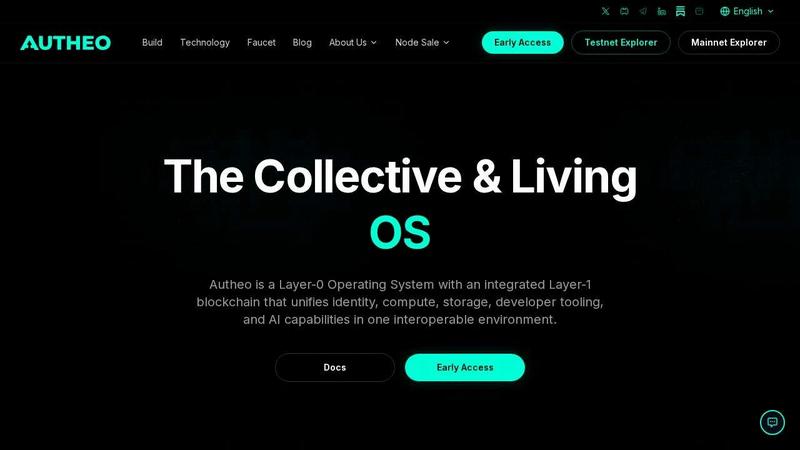
About Autheo
Autheo is a Layer-0 Operating System with an integrated Layer-1 blockchain designed to unify identity, compute, storage, developer tooling, and AI capabilities into one interoperable environment. It is built for developers, enterprises, and innovators who are frustrated with the fragmented state of Web3, where juggling multiple APIs, SDKs, and platforms leads to costly integrations and fragile systems. Autheo solves this by providing a composable, programmable, and sovereign foundation that bridges the gap between Web2 and Web3. The platform integrates six core components: a fast and sovereign Layer-0 plus Layer-1 blockchain foundation, decentralized core infrastructure for cloud compute and storage, full-stack SDKs for frontend and backend development, a native development environment called DevHub, a post-quantum secure identity system called TheoID, and an AI automation layer called THEO AI. Together, these components create a living network where every deployment fuels the collective, and the system learns, adapts, and evolves over time. Autheo is more than technology; it is a movement backed by over 100 co-founders and contributors across blockchain, AI, gaming, and open-source infrastructure. It represents the third wave of blockchain integration, where builders stop renting infrastructure and start owning an intelligent, connected internet.
Features of Autheo
Layer-0 + Layer-1 Blockchain Foundation
Autheo provides a fast, sovereign blockchain foundation that combines the flexibility of a Layer-0 operating system with the execution power of an integrated Layer-1 blockchain. This dual-layer architecture allows developers to launch custom chains and applications without sacrificing performance or security. The system is designed to solve the blockchain trilemma by offering scalability, decentralization, and security in a coordinated environment. This foundation ensures that all applications built on Autheo benefit from high throughput, low latency, and interoperability with other networks.
Full-Stack SDKs and DevHub
Autheo offers a unified framework for frontend, backend, smart contract development, and orchestration through its full-stack SDKs. This eliminates the need for developers to piecemeal together different tools and libraries. Complementing the SDKs is DevHub, a native development environment where builders can test, deploy, and scale their projects in a single workspace. DevHub streamlines the entire development lifecycle, from initial prototyping to production deployment, making it easier for teams to focus on innovation rather than infrastructure management.
TheoID Post-Quantum Secure Identity
TheoID is Autheo's advanced identity system that provides post-quantum secure authentication and sovereignty for both people and digital assets. In an era where quantum computing threatens traditional cryptographic methods, TheoID ensures that user identities and asset ownership remain secure against future threats. This feature enables self-sovereign identity management, allowing users to control their digital presence across applications and networks. For enterprises, TheoID simplifies compliance and reduces the risk of identity fraud.
THEO AI Intelligent Automation
THEO AI is Autheo's built-in artificial intelligence layer that powers intelligent automation and adaptive workflows across the entire ecosystem. As AI-native tools and autonomous agents join the stack, THEO AI enables applications to not just execute tasks but to learn from interactions, adapt to changing conditions, and evolve over time. This feature transforms static applications into dynamic, intelligent systems that can optimize resource allocation, predict user behavior, and automate complex decision-making processes. THEO AI is a core differentiator that makes Autheo a living, learning network.
Use Cases of Autheo
Decentralized Application Development
Developers can use Autheo to build and deploy full-stack decentralized applications without the complexity of integrating multiple Web3 services. Using the unified SDKs and DevHub, teams can create applications that combine smart contracts, decentralized storage, and AI-powered features in a single environment. For example, a developer can build a decentralized social media platform that uses TheoID for secure login, THEO AI for content moderation, and the Layer-1 blockchain for transparent governance, all while benefiting from scalable compute and storage.
Enterprise Web3 Integration
Enterprises looking to bridge the gap between Web2 and Web3 can leverage Autheo to modernize their infrastructure without complete overhauls. Autheo's interoperable environment allows businesses to integrate blockchain-based identity, supply chain tracking, or tokenized assets into existing systems. A logistics company, for instance, could use Autheo to create a transparent supply chain network that uses TheoID for partner verification, decentralized storage for shipment records, and AI for route optimization, all while maintaining compliance with industry regulations.
Sovereign Ecosystem Creation
Autheo enables organizations and communities to launch their own sovereign ecosystems with custom rules, tokens, and governance models. Using the Layer-0 foundation, founders can create application-specific chains that operate independently but remain interoperable with the broader Autheo network. This is ideal for gaming studios wanting to create in-game economies, DAOs requiring specialized governance structures, or regional networks needing localized compliance. Each ecosystem benefits from Autheo's shared infrastructure while maintaining full sovereignty over its operations.
AI-Native Autonomous Systems
Advanced users can build AI-native autonomous systems that operate and evolve on Autheo without constant human intervention. By combining THEO AI with decentralized compute and storage, developers can create intelligent agents that manage tasks such as automated trading, content generation, or network monitoring. For example, a decentralized finance platform could deploy AI agents that analyze market conditions, execute trades based on predefined strategies, and adapt to new data in real-time. These systems leverage the living network effect, becoming more efficient as they interact with other agents and applications.
Frequently Asked Questions
What is Autheo?
Autheo is a Layer-0 Operating System with an integrated Layer-1 blockchain that unifies identity, compute, storage, developer tooling, and AI capabilities into one interoperable environment. It is designed to solve the fragmentation problem in Web3 by providing a single foundation where developers and enterprises can build, deploy, and scale applications without piecemeal integrations. The platform includes six core components: a blockchain foundation, decentralized infrastructure, full-stack SDKs, a development environment called DevHub, a post-quantum identity system called TheoID, and an AI automation layer called THEO AI.
What can I build on Autheo?
You can build a wide range of applications on Autheo, including decentralized applications (dApps), sovereign blockchain ecosystems, AI-powered autonomous systems, enterprise Web3 integrations, gaming platforms with in-game economies, decentralized finance (DeFi) protocols, and secure identity management solutions. The platform's unified environment supports everything from simple smart contracts to complex multi-chain systems that leverage identity, compute, storage, and AI capabilities. Developers are limited only by their imagination, as Autheo provides all the tools needed to bring ideas to life.
How is Autheo different from Ethereum or Solana?
Autheo differs from Ethereum and Solana in several key ways. First, Autheo is a Layer-0 operating system with an integrated Layer-1 blockchain, whereas Ethereum and Solana are primarily Layer-1 platforms. This means Autheo provides a more comprehensive foundation that includes identity, compute, storage, and AI capabilities out of the box. Second, Autheo's TheoID offers post-quantum secure identity, which is a feature not natively available on other platforms. Third, Autheo's THEO AI layer enables intelligent automation and adaptive workflows, making it a living network that learns and evolves, unlike traditional static blockchains.
Is Autheo live?
Autheo is currently in development and offers early access for builders and node operators. The project has a testnet explorer and a mainnet explorer available for users to explore the network's capabilities. A node sale is also ongoing, allowing participants to become validators and contribute to network security and governance. The team recommends checking the official Autheo website and documentation for the most up-to-date information on mainnet launch dates, testnet participation, and node sale details.
Similar to Autheo
Polymarket Trading Bot For Crypto
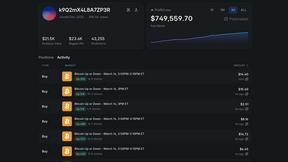
This Polymarket trading bot automates high-frequency arbitrage and directional strategies on short-term crypto Up or Down markets with full source.

Bitcoin Loans Market
Bitcoin Loans Market lets you compare every Bitcoin-backed loan side by side with clear APR, custody, and terms to find the right fit.

Perpfinder
Perpfinder provides a comprehensive live data overview of crypto perpetual futures, tracking volume, fees, and open interest across 30+ exchanges.
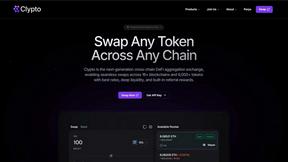
Clypto
Clypto is a cross-chain DeFi aggregation exchange enabling instant low-fee swaps across over 6000 tokens on 16 blockchains with best rates.